Call Us To Schedule Your Next Appointment

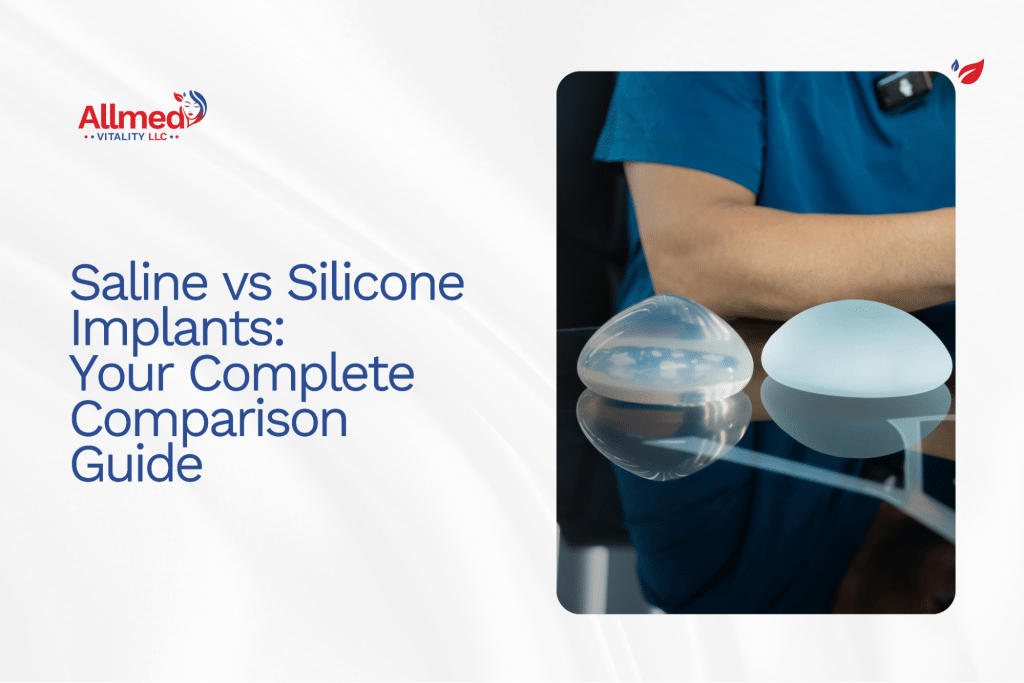
Here’s something most people get wrong. Silicone breast implants are not automatically “better” than saline, and saline is not the outdated, inferior choice some people make it out to be.
The real answer to saline vs silicone implants depends entirely on your body type, your budget, and what feels right for you. Neither option wins across the board.
That’s exactly why so many patients come to Allmed Vitality confused after researching on their own. Too much generic advice, not enough guidance tailored to their actual situation.
Let’s clear things up. By the end of this guide, you’ll know exactly which option makes sense for you, backed by facts instead of internet noise.
Beautiful Results Begin with Informed Implant Choices
Saline breast implants are silicone shells filled with sterile salt water after they are placed in the body. This means surgeons can insert them through a smaller incision, then fill them once positioned.
If a saline implant ever ruptures, your body simply absorbs the harmless saline and will go through the normal kidney and urine process. You will notice a deflation right away, which actually makes problems easier to catch.
Many patients choose breast augmentation saline implants because they are FDA-approved for anyone 18 and older. They also tend to be more budget-friendly than their silicone counterparts.
Silicone breast implants are pre-filled with a thick, gel-like substance that mimics the feel of natural breast tissue. Surgeons insert them already filled, so incisions tend to be slightly longer.
Modern silicone gel is cohesive, meaning it holds its shape even if the shell is cut. This is often called the “gummy bear” implant because of how it behaves.
These implants are FDA-approved for patients 22 and older for cosmetic use. They are known for a soft, natural feel that many patients say closely resembles real breast tissue.
Let’s put silicone vs saline implants side by side so you can see exactly where they differ.
| Feature | Saline Implants | Silicone Implants |
|---|---|---|
Fill material | Sterile salt water | Silicone gel |
Incision size | Smaller | Slightly larger |
Feel | Firmer | Softer, more natural |
Rupture detection | Immediate (deflates) | Often silent, needs MRI |
Minimum age (cosmetic) | 18 | 22 |
Average cost | Lower | Higher |
Adjustability | Yes, before placement | No, pre-filled |
If you are researching how saline vs silicone implants look, the difference shows up mostly in movement and texture, not necessarily in shape. Silicone tends to move and settle more like natural tissue.
Still weighing your options? Explore our complete breast augmentation guide to better understand your choices and find the option that best matches your goals.
| Silicone Breast Implants | Saline Breast Implants | |
|---|---|---|
Pros |
|
|
Cons |
|
|
How long do silicone implants actually last? On average, most patients get 10 to 20 years before considering replacement, though this varies by individual.
Let’s talk numbers, because the cost of breast saline implants is often the deciding factor for many patients. Saline implants typically run lower simply due to material and manufacturing costs.
The average cost of silicone implants that patients pay nationally tends to run higher because of the gel material itself. Expect the price gap to range from a few hundred to over a thousand dollars.
Here is a rough cost snapshot many clinics report:
| Implant Type | Typical Cost Range (Implants Only) |
|---|---|
Saline | $1,000 to $1,500 per implant |
Silicone | $1,500 to $2,500 per implant |
Keep in mind, silicone breast implants cost more partly because of the pre-filled manufacturing process. Total surgery cost also includes anesthesia, facility fees, and surgeon expertise.
There is a range of considerations you should take into account. For example, you are athletic, have very little natural breast tissue, and want a soft, undetectable result. Silicone might be your best fit because it minimizes rippling on lean frames.
Now picture a different scenario. You want a lower upfront cost, easier monitoring, and are comfortable with a slightly firmer feel. Saline could be the smarter choice for you.
The difference between saline and silicone implants often comes down to lifestyle and priorities, not just looks. Ask yourself what matters most: cost, feel, or peace of mind around rupture detection.
If your goals extend beyond the breast area, Allmed Vitality also offers a full range of body procedures to help you reach your ideal silhouette.
Myth: Silicone implants are more dangerous than saline.
Fact: Both are FDA-approved and considered safe when properly monitored.
Myth: All implants need replacement every 10 years, no exceptions.
Fact: Many last much longer, and replacement depends on individual factors and imaging results.
Myth: You cannot tell the difference between silicone boobs and saline at all.
Fact: Trained hands and eyes often can, especially in slim patients with thin tissue coverage.
If you notice sudden deflation, unusual swelling, or hardness, contact your surgeon immediately. This is especially urgent with saline implants, since deflation happens fast and needs prompt attention.
For silicone implants, watch for breast shape changes, pain, or firmness, since ruptures can be silent. Schedule an MRI or ultrasound right away if anything feels different than usual.
Never ignore sudden fever, redness, or severe pain after augmentation surgery. These could signal infection and require urgent medical evaluation, not a routine follow-up appointment.

Choosing between saline vs. silicone implants is a personal decision with no single right answer.
The best choice depends on what feels right for your body, lifestyle, and long-term goals.
At Allmed Vitality, we know every patient has different priorities and expectations.
Our experienced surgeons take time to listen, answer questions, and recommend options that suit your unique needs.
Feeling informed can make the decision feel much less overwhelming.
With the right guidance and realistic expectations, you can move forward knowing your choice reflects what matters most to you.
Start Your Breast Augmentation Journey with Confidence
Most saline breast implants last 10 to 15 years, but everyone’s experience is different. Regular checkups with your surgeon can help ensure your implants remain in good condition.
The weight depends on the implant size. Most silicone implants weigh between 200 and 400 grams, which is about the weight of a small to medium apple.
Yes. Saline breast implants are FDA-approved and have been safely used for many years. If a saline implant ruptures, the sterile saltwater is naturally absorbed by the body, making the change in breast size easy to notice.
Many patients say silicone implants feel softer and more like natural breast tissue. Saline implants may feel a little firmer, especially for those with less natural breast tissue. The best choice depends on your body, preferences, and goals.
In most cases, cosmetic breast augmentation is not covered by insurance. However, implants used for breast reconstruction after certain medical conditions or procedures may be covered. Your surgeon and insurance provider can help you understand your coverage options.