Call Us To Schedule Your Next Appointment

Considering a breast implant surgery can bring up a mix of emotions, excitement, curiosity, and maybe even a little nervousness. That’s completely normal. And for many people, January’s “fresh start” mindset makes it feel like the right moment to reflect, reset, and reconsider the choices that genuinely feel right for you.
Whether you’re just starting to explore breast augmentation in 2026 or getting ready for the next step, understanding the entire process and available options helps you move forward with clarity and confidence.
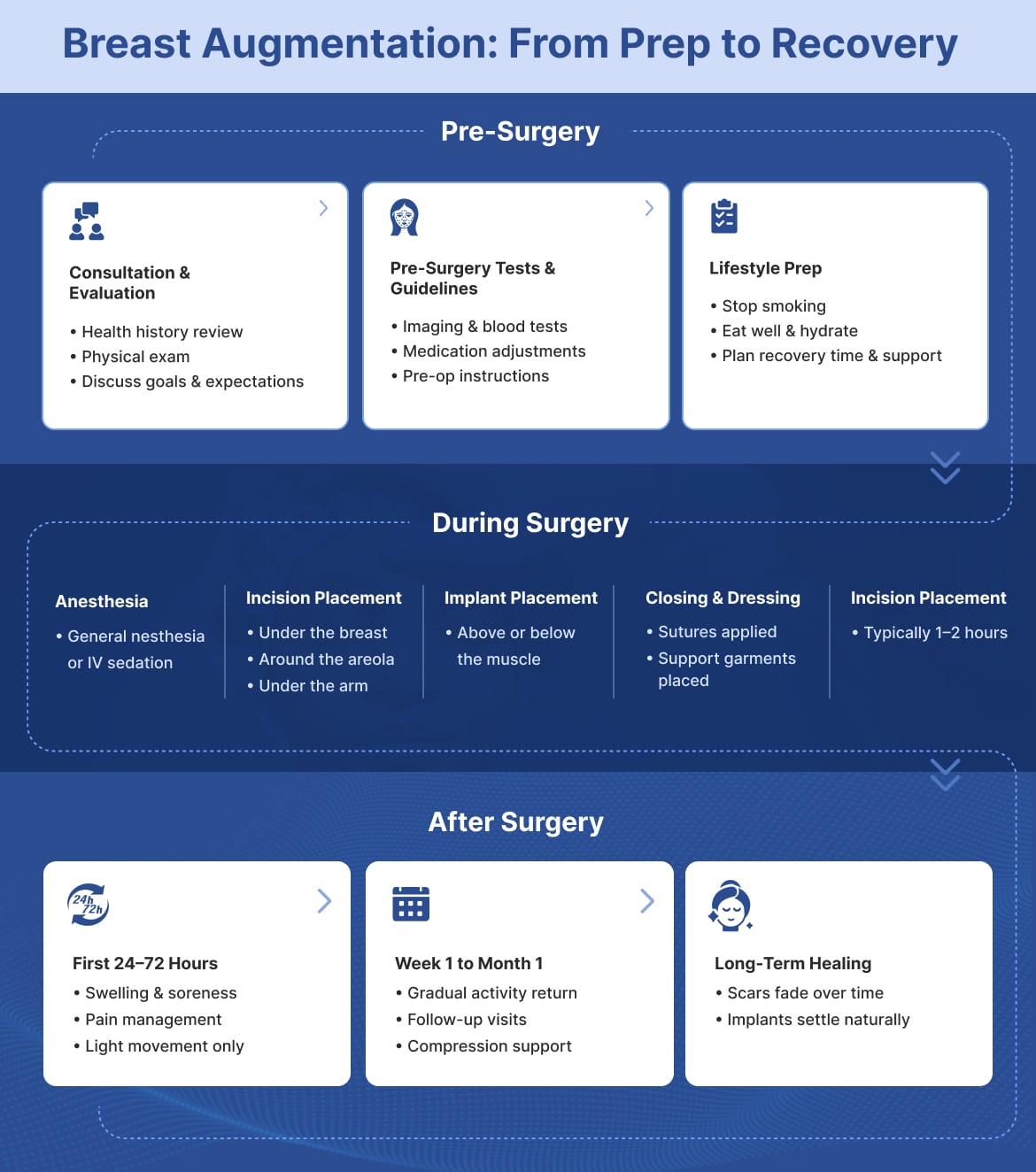
Let’s break everything down, including pre-op and post-op, so you can have a clearer picture of what lies ahead.
New Year, New Look
The breast augmentation procedure enhances breast size and shape. This is either done through augmentation mammoplasty with breast implants or by transferring fat from another part of your body (also called fat transfer breast augmentation).
Implants can create a more noticeable change, depending on the type and size you choose. Fat transfer breast augmentation, on the other hand, is the go-to option for those seeking a softer and more natural-looking result.
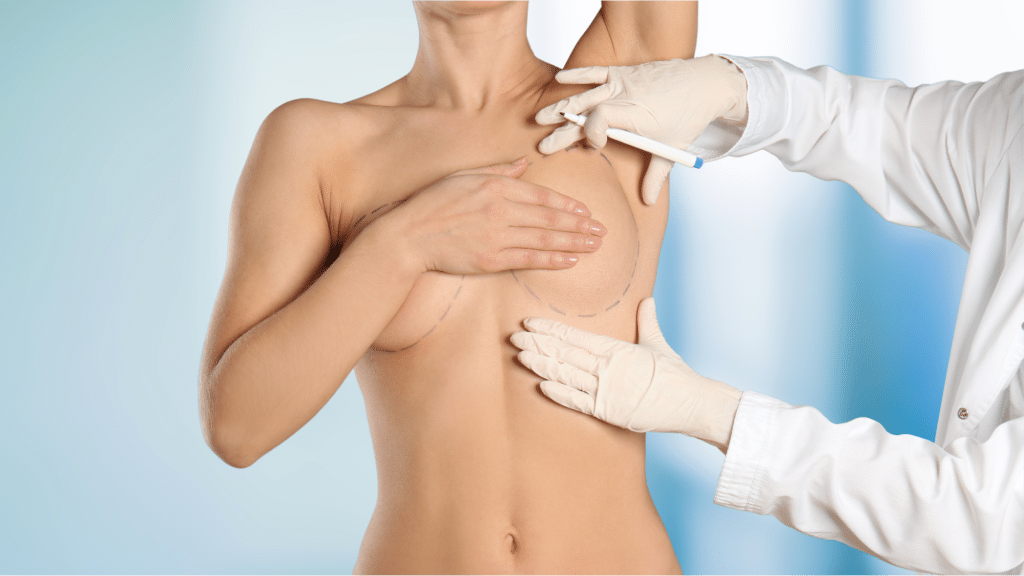
Before the procedure, you’ll meet with a doctor for a breast augmentation consultation to determine whether you’re an ideal candidate. You may be a good fit if:
Fun fact: If you’re still on the fence about whether it’s a safe procedure, don’t worry! Breast augmentation is one of the most researched and successful cosmetic procedures in the country. In 2024 alone, more than 300,000 people chose to go under the knife.
“But wait, what type of implant should I get?”
It’s a question that naturally comes up when you finally say yes to your ideal breasts. The good news is that, thanks to years of in-depth research, there are now many options to choose from that are approved by the Food & Drug Administration (FDA).
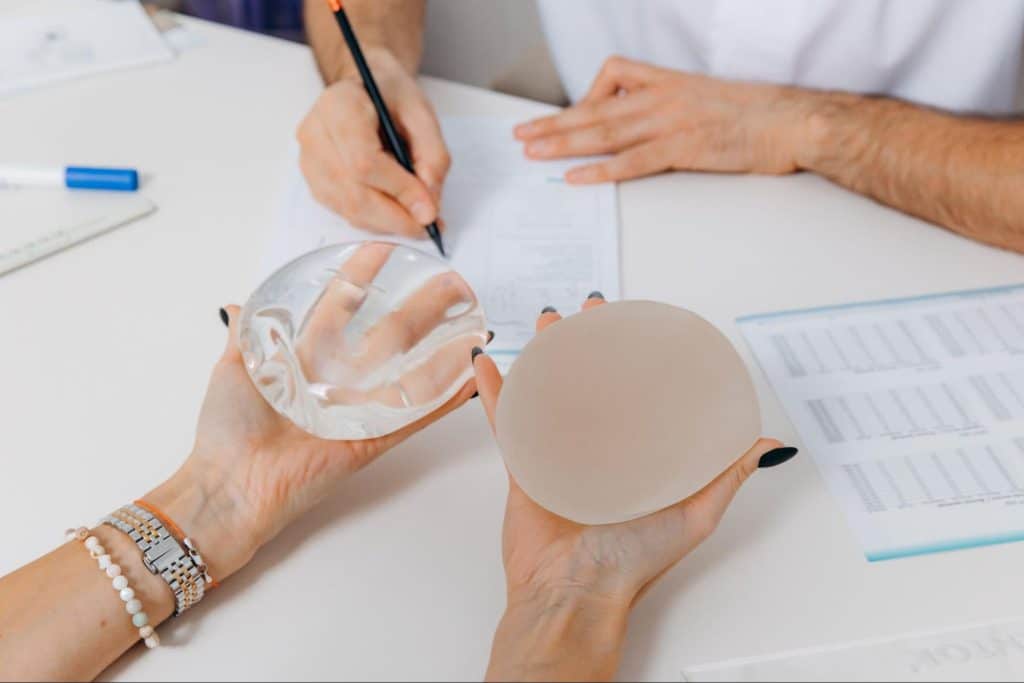
Silicone breast implants have a silicone outer shell and are pre-filled with a thick, cohesive silicone gel that closely mimics natural breast tissue. Because the gel feels similar to human fat, silicone implants are a popular choice for those who want a softer, more natural look. They are FDA-approved for people aged 22 and older.
Silicone implants tend to have larger incisions as they are pre-filled. They also cost more, but they are extremely resilient. Like all implants, there is a small risk of rupture that might not be immediately noticeable. If it does rupture, the gel will leak slowly, potentially leading to breast pain or a change in size and shape. That said, implant ruptures are rare, and most are detected early through routine check-ups.
Saline breast implants also have a silicone outer shell, but they are filled with sterile salt water instead of gel. These implants are inserted empty, allowing for smaller incisions, and are just filled once in place. Because saline implants share a similar salt concentration to the human body (approximately 0.9%), our bodies can safely absorb the liquid if a rupture happens. Saline implants are available to people ages 18 and older.
Saline implants are generally more affordable than silicone implants, but there are some trade-offs. They are more prone to rippling and shifting due to the lower viscosity of saline compared to silicone, which can make the edges of the implants visible through the skin. Because the implant filling is liquid, they tend to be rounder and firmer, far from the natural look and feel of silicone.
This type of implant is similar to silicone implants, but with a firmer filling than silicone gel. Also known as form-stable implants, they are made of highly cohesive silicone gel that maintains their shape, reducing the risk of sagging over time. This gives you a natural-looking result while reducing the risk of leaking and shifting. Gummy bear implants are FDA-approved for ages 22 and older.
Because gummy bear implants are more stable and less prone to rippling, they are more expensive than traditional silicone and saline implants. They also require a much larger incision during surgery.
Breast implants also come in a variety of shapes and profiles, allowing you to choose a look that best matches your body, aesthetic goals, and lifestyle. Understanding the factors can help you achieve your ideal result.
Keep in mind:
Clearly communicating your desired look helps your doctor guide you, since results depend on factors like chest width, implant profile, and volume.
Now that you have an idea of the implant shape and profile you want, you can feel more confident when consulting with your doctor about your desired size, contour, and overall appearance.
Breast implants aren’t lifetime devices, so you may need another procedure someday. The longer they’re in, the higher the chance of complications, which is why it’s important to stay on top of regular follow-up checks.
Medical Risks
The FDA keeps an updated list of possible complications that happen to at least 1% of breast implant patients. These are directly related to how your body responds to the implant or the surgery. Some of these breast augmentation risks include:
In rare cases, textured implants have been linked to a condition called breast implant-associated anaplastic large cell lymphoma (BIA-ALCL). Because of this risk, many plastic surgeons now avoid textured implants and prefer smooth implants.
Lifestyle and Aesthetic Risks
Additionally, some complications can affect the appearance, your daily activities, or necessitate continuous attention.
Breast augmentation surgery can give you your ideal results, but it’s important to keep in mind that they aren’t meant to last a lifetime. Understanding the risks and keeping up with regular follow-ups with your trusted healthcare provider helps ensure breast implant safety so you look good and feel good in the long run.
Allmed Vitality: Your Partner for Confident Decisions
If you’re ready to take the next step but still weighing your options, you’re in the right place. At Allmed Vitality LLC, our well-qualified and experienced plastic surgeons are here to guide you with care, clarity, and expertise so you can move towards your aesthetic goals with excitement and support.
Your Aesthetic Goals Await
Medical Disclaimer
This content is for educational purposes only and does not replace professional medical advice. Always consult a qualified healthcare provider before undergoing any surgical procedure.
Yes, breast augmentation is generally safe, especially with today’s advanced techniques. Modern procedures are designed to fit your body and goals, while minimizing risks and helping implants last longer.
How long your breast implants last can depend on the type you choose. On average, they last 10 to 20 years, and some can go even longer without any problems. That said, it’s completely normal for implants to be replaced or removed over time due to wear, rupture, shifting, or changes in your body.
Yes! Most people can breastfeed, especially if the implant is under the muscle and the incision avoids the areola. Talk with your surgeon if breastfeeding is a priority.
Your breast augmentation healing time can depend on several factors. Most can go back to work after one to two weeks, depending on the type of work you have and how you’re healing. If your job involves heavy lifting or any taxing physical activity, you may need more than three weeks to heal before resuming your usual duties. It’s always best to follow your surgeon’s advice for a safe and effective recovery.
Yes, breast augmentation does leave scars. Any incision needed to place the implants will naturally leave a mark as the skin heals. The good news is that skilled surgeons can position incisions strategically, making scars discreet and often barely noticeable over time.